

In short
- 01Braces optionsMetal, porcelain, lingual and clear aligner braces are all used to straighten teeth.
- 02Retention afterwardsFixed or removable retainers hold the teeth in their new position once active treatment ends.
- 03Jaw correctionSevere jaw anomalies may need surgery alongside orthodontic treatment.
Crooked or crowded teeth affect more than appearance. Poor alignment changes how the bite functions, and correcting it early can help prevent tooth decay, gum disease and jaw joint problems that might otherwise develop later.
What orthodontics treats
Orthodontics is the branch of dentistry that diagnoses and treats misaligned teeth and jaw disorders. An orthodontist specialises in jaw anomalies, tooth crowding and related dental problems, and treatment brings functional as well as aesthetic benefits.
Crowded teeth
Crowded teeth are teeth that haven’t settled into proper alignment: there may be gaps between teeth, teeth that cross over one another, or teeth positioned too close together. The condition is usually caused by genetic factors, problems with tooth structure, or irregular jaw development.
How crowded teeth are treated
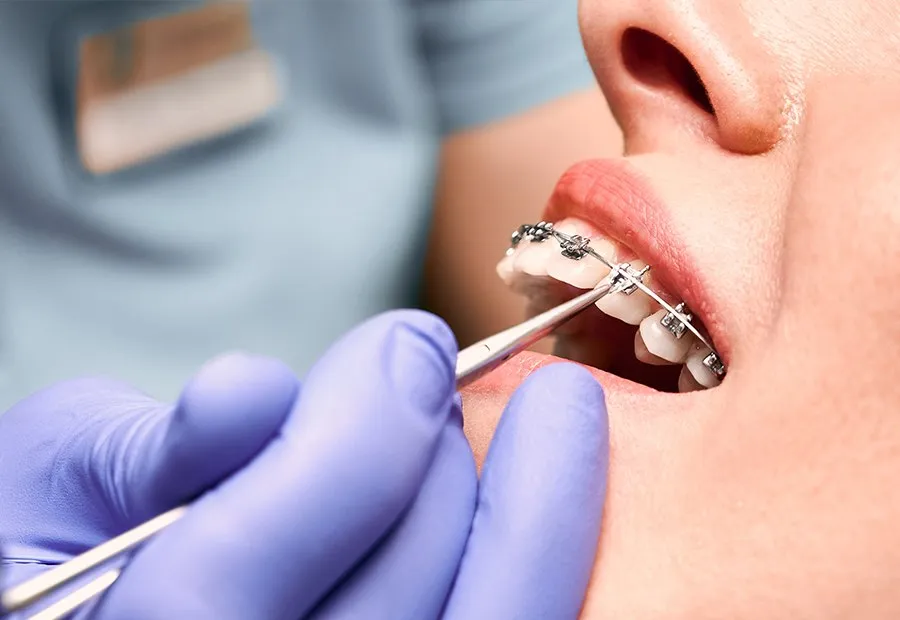
Treatment aligns the teeth using appliances such as braces: wires and brackets attached to the teeth and worn for a set period to bring them into the desired position.
Types of braces
Braces are made from different materials, and the choice often comes down to the patient’s aesthetic preference:
- Metal braces
- Porcelain braces
- Lingual braces
- Clear aligners
Jaw anomalies
How jaw anomalies develop
Jaw anomalies happen when the upper and lower jaw develop unevenly. Causes include genetic factors, injury, trauma, or prolonged pacifier use. The result can be a jaw that’s over- or under-developed, a misaligned jaw joint, or jaw bones that don’t grow to match each other.
Treating jaw anomalies
A specialist orthodontist manages treatment in stages:
- Examination and diagnosis. X-rays, digital scans and, where needed, 3D imaging show the type and severity of the anomaly.
- Treatment plan. The orthodontist sets out which appliances will be used, the expected duration, and what to expect at each stage.
- Orthodontic appliances. Brackets, wires, clear aligners and other appliances are adjusted at regular intervals to bring the jaw into the correct position.
- Surgical intervention. Where the jaw bones are significantly out of alignment, a specialist surgeon may operate alongside the orthodontic treatment.
After treatment
Once active treatment ends, patients move into a retention stage. Fixed retainers are thin wires bonded behind the teeth and left in place for a set period; removable retainers are custom-made aligners or clear splints, usually worn at night. Regular check-ups continue through this stage so the orthodontist can assess the retainer, make adjustments, and confirm the teeth are staying in position.
Ongoing oral hygiene matters just as much afterwards. Brushing, flossing and regular check-ups protect both your teeth and the results of the treatment, and retainers need to be kept clean and well maintained.
With any surgical or interventional procedure, results can vary from person to person.
You are reading about Orthodontics. Ask me anything about it, or pick a question below.
Frequently asked questions
Are lifestyle changes necessary after orthodontic treatment?
Regular dental care and check-ups remain important after treatment, especially if you're wearing a retention appliance. It's also best to avoid hard or sticky foods.
Is it painful to treat crooked teeth?
Some mild discomfort during treatment is normal and temporary. Your dentist can advise on painkillers or cold compresses if you need them.
How should tooth brushing be after treatment?
Keep brushing, flossing and following any other care steps your dentist recommends. This protects both your teeth and the results of the treatment.
Videos
Send us your panoramic X-ray
Our professors reply with a treatment plan.