

In short
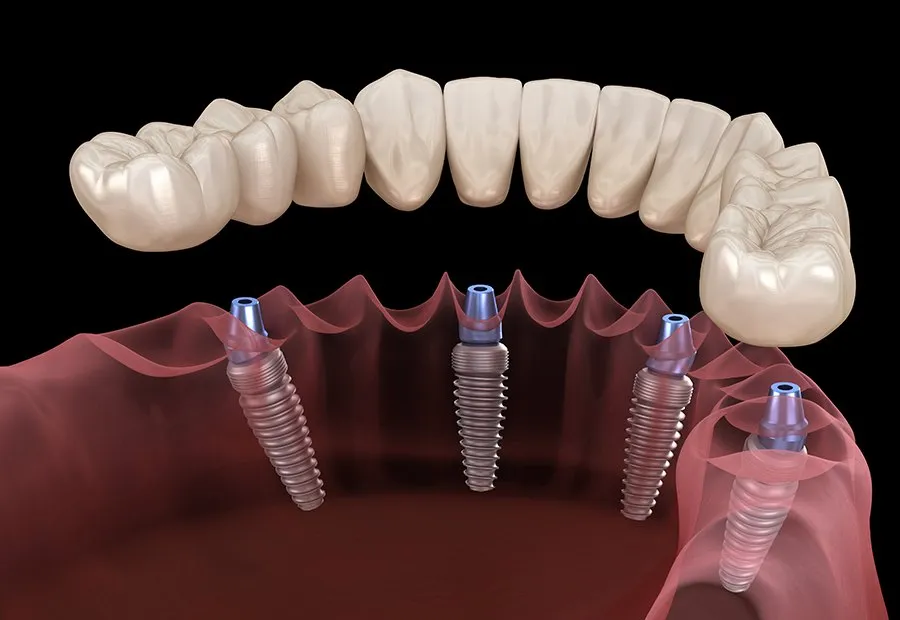
- 01Titanium tooth rootsImplants are titanium screws placed in the jawbone that fuse with the bone to act as an artificial tooth root.
- 02One or two stagesTreatment can use a single-stage approach with a temporary healing cap, or a two-stage approach with a longer healing period.
- 03Healing takes monthsFusion with the jawbone takes an average of 2 to 3 months in the lower jaw and 5 to 6 months in the upper jaw.
Dental implants are titanium screws that act as artificial tooth roots, placed into the jawbone. Titanium is biologically compatible with the body, which allows the implant to fuse with the bone.
Why are dental implants used?
Tooth loss causes both aesthetic and functional problems, and implants replace lost teeth with durable, natural-looking teeth that restore chewing function and help protect the jawbone structure. If gaps from missing teeth are left unfilled, nearby healthy teeth can be affected over time. Implants can be used for a single missing tooth or for several.
Who can have dental implants?
Implants can be a suitable option at most ages, though general health and jawbone structure need to be taken into account. Jawbone development needs to be complete before treatment. If there is bone loss at the site, it can sometimes be reinforced with a graft so implants are still possible. People who prefer not to use a removable prosthesis often choose this option.
How is implant treatment performed?
Treatment begins with a detailed consultation and examination. X-rays are taken so the dentist can assess the jawbone and plan the treatment.
The implant, usually made of titanium, is then placed into the jawbone. This is done under local anaesthetic, so you should not feel pain during the procedure. Some cases use a single-stage approach with a temporary healing cap; others use a two-stage approach, where the implant is covered by the gum during a longer healing period while it fuses with the jawbone. Fusion takes an average of 2 to 3 months for the lower jaw and 5 to 6 months for the upper jaw. A solid bond between implant and jawbone is essential for the treatment to succeed.
Once fusion is complete, a personalised prosthetic tooth is fitted onto the implant.
What to consider before treatment
Before treatment starts, the jawbone needs a detailed examination and health check. Resorption, meaning bone loss in the jawbone, needs to be assessed, since a suitable amount of bone is needed to begin. Points worth going through with your dentist beforehand:
- Treatment planning
- A comprehensive examination
- Your oral hygiene
- The dentist’s experience with the procedure
Aftercare
Mild pain or swelling after treatment is normal; contact your dentist if problems continue. Avoid hard foods while the surgical site is healing, and continue to avoid them until any stitches are removed or have dissolved. Soft, room-temperature foods such as yoghurt, milk, purée and soup are often recommended during this period. It’s also important to limit or stop smoking and alcohol, and to keep up regular oral care so the new teeth last.
With any surgical or interventional procedure, results can vary from person to person.
You are reading about Dental implants (implantology). Ask me anything about it, or pick a question below.
Frequently asked questions
Can a dental bridge be built over natural teeth instead of an implant?
Yes. A bridge can be anchored to a natural tooth as well as to an implant, and bridges connected to a natural tooth are thought to last longer.
Are dental implants painful?
Implants are less painful than most people expect. The area is numbed with local anaesthetic beforehand, so you should not feel pain during the procedure.
How many types of implant are there?
Several types of implant are used depending on the case, including titanium, ceramic, ceramic-on-titanium, endodontic and transosseous implants.
Videos
Send us your panoramic X-ray
Our professors reply with a treatment plan.