


In short
- 01Surgical dental careOral and maxillofacial surgery treats the mouth, jaw and facial tissues, including extractions, fractures and tumour removal.
- 02TMJ joint proceduresOptions for jaw joint problems range from arthrocentesis, which flushes the joint, to disc repositioning and reconstruction.
- 03Recovery takes timeMost pain and swelling settle within the first month after surgery, though full healing can take longer.
Oral and maxillofacial surgery treats the tissues of the mouth, such as the lips, tongue, cheeks and salivary glands, along with conditions affecting the teeth and jaw joints. Procedures include tooth extractions, jaw fracture repair and tumour removal, and specialists in this field also work alongside oral and maxillofacial radiology.
What is maxillofacial surgery?
Maxillofacial surgery deals with the face and jaw, including congenital facial conditions and jaw fractures caused by trauma. An oral and maxillofacial surgeon has completed additional surgical training after dental training, and usually works alongside dentists, plastic surgeons and ear, nose and throat specialists. A maxillofacial CT scan may be needed before treatment.
Procedures in this field include tooth extractions, jaw fracture repair, aesthetic surgery and tumour removal, with the treatment plan built around the individual patient.
What are temporomandibular joint disorders?
The temporomandibular joint (TMJ) sits between the jaw bones and allows jaw movement. Disorders here usually show up as jaw pain, locking or limited movement, and treating them falls within oral and maxillofacial surgery. Options include:
- Arthrocentesis, which removes and flushes fluid from the joint to restore function
- Disc repositioning, to move a slipped joint disc back into place
- Reconstruction, to remove damaged or deformed tissue and reshape the joint surfaces
Periodontal and orthognathic surgery
Periodontal surgery treats gum disease, such as gum recession and gingivitis, aiming to restore oral health. Orthognathic surgery corrects structural problems in the jaw and facial bones, whether congenital or caused by trauma, improving both function and appearance.
Oral pathology and oral oncology
Oral pathology examines and diagnoses conditions in and around the mouth, such as lesions, tumours and inflammation, and is important for catching problems early. Oral oncology deals with cancers of the mouth, tongue and lips, and usually involves a team that includes oncologists and radiologists alongside the surgeon.
Recovery after surgery
How long recovery takes depends on the procedure, your general health, and how well the post-operative care is managed.
In the first few hours you are monitored closely while the anaesthetic wears off. Pain, infection and swelling are managed in the first few days with prescribed painkillers, anti-inflammatory medication and ice. Around the first week, your dentist checks the surgical site, removes any sutures, and assesses your wound and general health.
Most patients see a significant reduction in pain and discomfort within the first month, though some take longer to recover fully. By six months the surgical site has usually healed, though in some cases full healing can take up to a year.
With any surgical or interventional procedure, results can vary from person to person.
You are reading about Oral and maxillofacial surgery. Ask me anything about it, or pick a question below.
Frequently asked questions
Is root canal treatment part of oral and maxillofacial surgery?
No. Root canal treatment and fillings are non-surgical procedures. A maxillofacial surgeon carries out more extensive, surgical operations.
How long does recovery take after oral and maxillofacial surgery?
Recovery depends on the procedure and your general health. Pain and swelling are usually managed with medication and ice in the first few days, sutures are checked and removed around the first week, and most patients see significant improvement within a month. Full healing can take longer, sometimes up to a year in some cases.
What is a wisdom tooth?
Wisdom teeth are the third molars at the back of the jaw. They usually come through in your twenties and often erupt only partially, or stay embedded in the jawbone, because of limited space, an angled position, or the density of the surrounding bone.
Videos
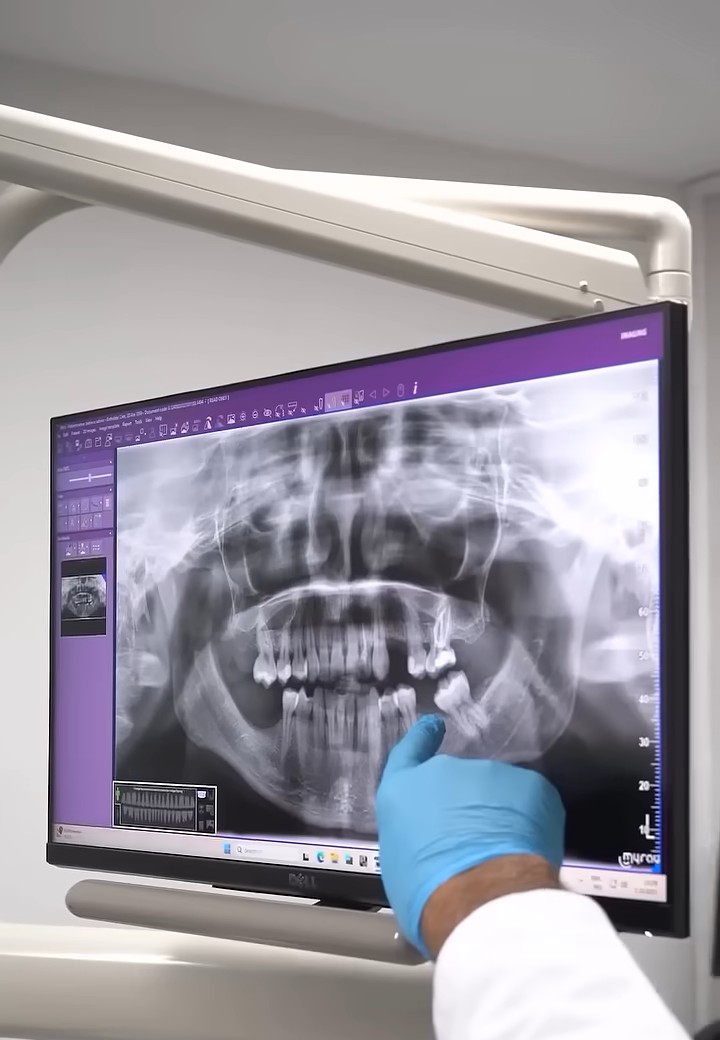
Send us your panoramic X-ray
Our professors reply with a treatment plan.