

In short
- 01Six prosthesis typesOptions include dentures, bridges, implants, crowns, removable partials and implant-supported dentures.
- 02Custom-made in a labProstheses are made from impressions and measurements, then crafted to match your bite.
- 03Different lifespansDentures typically last 5 to 7 years, while bridges and implants can last 10 to 15 years or more with care.
Losing a tooth affects more than appearance: it can also disrupt chewing, biting and speech. A dental prosthesis replaces the missing tooth or teeth to restore these functions.
What is a dental prosthesis?
A dental prosthesis is an artificial tooth or set of teeth that replaces missing teeth and restores lost function. It’s designed to meet both aesthetic and functional needs, with an appearance close to the patient’s natural tooth structure.
Types of dental prosthesis
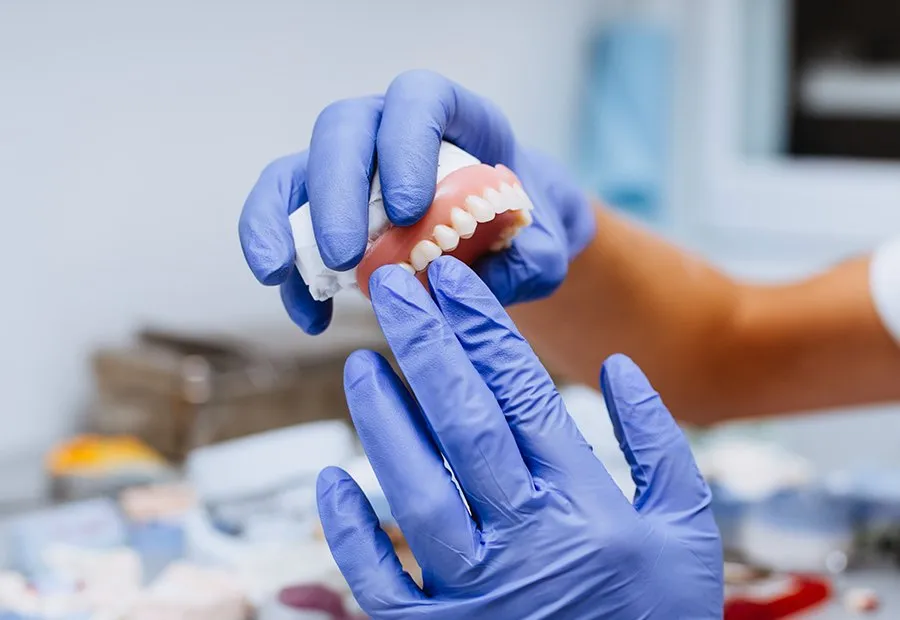
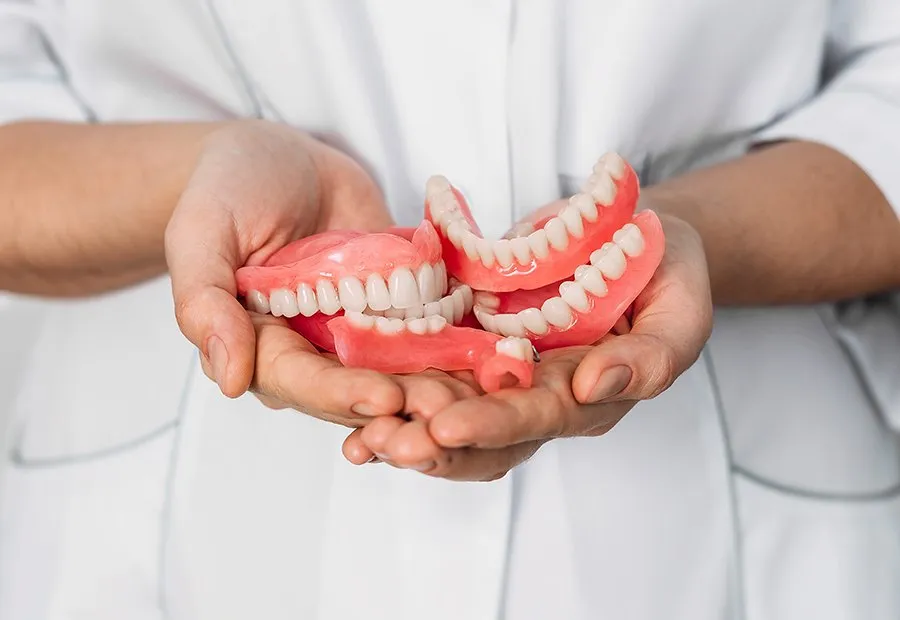
- Dentures: removable prostheses that replace missing teeth and the surrounding tissue. There are two main types, complete and partial.
- Dental bridges: fixed devices used to replace one or more missing teeth, made of artificial teeth (pontics) anchored to adjacent natural teeth or implants. Bridges help restore chewing function and maintain facial structure.
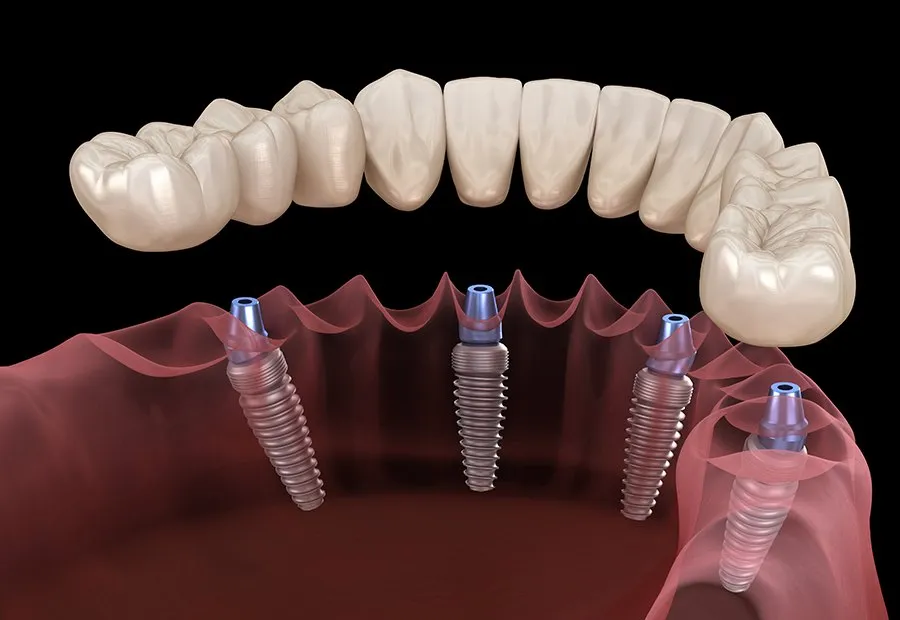
- Dental implants: artificial tooth roots, made of titanium, placed surgically in the jawbone. They act as a foundation for a crown, bridge or denture, and provide stability and a natural appearance.
- Dental crowns: also called caps, these are prosthetic coverings that encase a damaged or weakened tooth to restore its shape, size, strength and appearance. Crowns can be made of porcelain, metal, or a combination of both.
- Removable partial dentures: similar to standard partial dentures, but designed to be taken out for cleaning. They consist of replacement teeth on a gum-coloured base, connected by a metal framework.
- Implant-supported dentures: removable dentures anchored to implants, which gives added stability and helps stop the denture slipping while eating or speaking.
How dental prostheses are made and fitted
Treatment starts with a consultation where the dentist evaluates your oral health and the available options, taking into account the extent of tooth loss, gum condition and your aesthetic preferences. From this, a treatment plan is developed based on the number of missing teeth, the condition of the remaining teeth, and the jawbone.
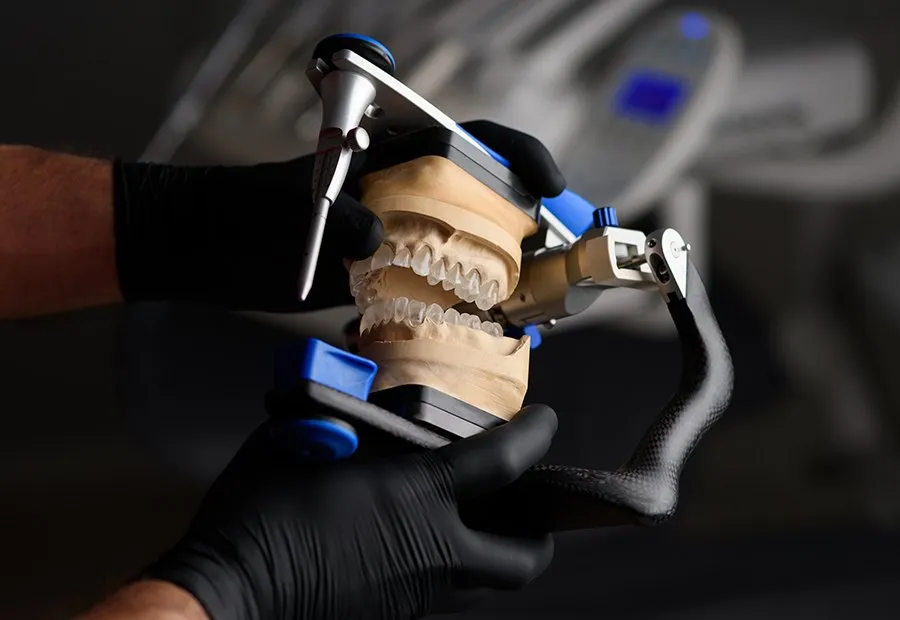
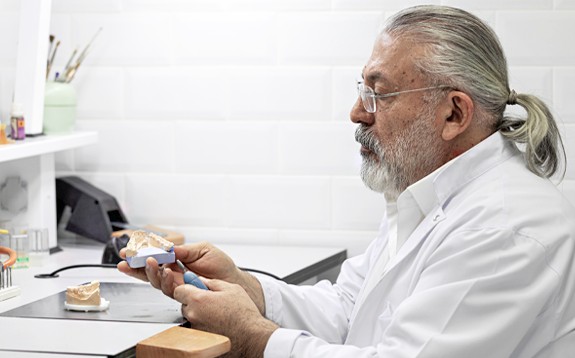
For dentures and bridges, the dentist takes impressions and measurements of your mouth. These guide the fabrication of a custom device that fits your bite and aligns with your natural teeth. A dental laboratory then makes the prosthesis using durable, natural-looking materials.
For fixed prostheses such as bridges or crowns, the adjacent natural teeth are prepared by removing a small amount of enamel to create space. For implants, a surgical procedure anchors the implant posts in the jawbone.
Once the prosthesis is ready, a trial fitting checks comfort for removable devices, or alignment, bite and appearance for fixed ones, with any adjustments made at this stage. At final placement, patients with removable prostheses are shown how to insert, remove and maintain them, while fixed prostheses such as bridges or crowns are cemented or attached permanently.
Aftercare
Follow-up appointments let the dentist monitor how the prosthesis is settling and address any discomfort with further adjustments. Pay attention to oral hygiene and diet, and take care to avoid damaging the prosthesis. Ask your dentist for the cleaning routine that suits your specific device.
With any surgical or interventional procedure, results can vary from person to person.
You are reading about Dental prosthesis. Ask me anything about it, or pick a question below.
Frequently asked questions
Is it possible to eat comfortably with a dental prosthesis?
Yes, prostheses are designed to restore normal chewing function, though it can take some time to adjust. It helps to start with softer foods and gradually return to a regular diet.
Are dental prostheses comfortable to wear?
Yes, once properly fitted. Your dentist ensures a precise fit at the initial application, and any discomfort can usually be addressed with adjustments at follow-up appointments.
How long do dental prostheses last?
This depends on the type and on your oral care. On average, dentures last around 5 to 7 years, while bridges and implants can last 10 to 15 years or more with proper care.
Send us your panoramic X-ray
Our professors reply with a treatment plan.